YOONCHAN WRITES / RESEARCH
Do Orphan Genes Challenge Evolutionary Theory?
Evolutionary Biology
Do Orphan Genes Challenge Evolutionary Theory? By Yoonchan Woo
Abstract
Since their discovery in the late 20th century, orphan genes—genes lacking identifiable homologs in other species—have frequently served as a counterargument to universal common ancestry. This qualitative literature review investigates the extent to which orphan genes challenge the theoretical framework of evolutionary biology and whether they necessitate substantial revisions. To address this, an extensive literature search was conducted using the Google search engine and other academic databases, including Google Scholar, between February and June 2026. The strategy utilized specific keywords, including "orphan genes," "de novo gene birth," and "homology detection failure," selecting 18 authoritative, peer-reviewed articles and commentaries based on strict inclusion criteria. This study concludes that orphan genes do not contradict the central principles of evolutionary theory. Instead of exposing logical flaws, they illustrate the profound complexity and adaptability of evolutionary mechanisms, largely explained by recent updates in homology detection limitations and microbial dark matter.
Introduction
This paper examines the implications of orphan genes for evolutionary theory, with particular emphasis on the validity of universal common ancestry. Since the time of Charles Darwin, evolutionary theory has become the dominant scientific framework for explaining the diversity and origins of life, supported by extensive evidence from paleontology, comparative anatomy, genetics, and molecular biology. Central to modern evolutionary theory is the hypothesis of universal common ancestry, which proposes that all living organisms ultimately descended from a single ancestral population that existed billions of years ago.
In On the Origin of Species, Darwin argued that all species are connected through a branching tree of life. Contemporary evolutionary biology generally traces this lineage back to the Last Universal Common Ancestor (LUCA), a hypothetical organism believed to have lived between 3.9 and 4.2 billion years ago (Moody et al.). As one of the foundational principles of evolutionary theory, universal common ancestry serves as the conceptual framework through which genetic similarities and biological diversity are interpreted.
The emergence of orphan genes during the genomic era has prompted questions regarding the explanatory scope of evolutionary theory, particularly the hypothesis of common ancestry. Orphan genes are genes that appear to be unique to a specific species or lineage and lack identifiable homologs—genes with similar sequences—in other organisms.
Because evolutionary theory maintains that all organisms descended from common ancestors, the apparent existence of genes with no detectable evolutionary relatives has been cited by some critics as evidence against common ancestry. Advocates of creationism and intelligent design have argued that orphan genes are inconsistent with evolutionary expectations and may instead suggest purposeful design by an intelligent agent (Tomkins).
The existence of orphan genes first attracted significant attention following the completion of the Yeast Genome Project in the mid-1990s. Of approximately 6,000 genes identified in yeast, nearly 2,000 showed no detectable similarity to any previously known genetic sequences, leading researchers to regard them as a high-priority subject for further investigation (Dujon). Since then, orphan genes have remained a topic of debate within evolutionary biology and have frequently been referenced in discussions concerning the strengths and limitations of evolutionary explanations.
This study seeks to address the following research question: To what extent does the existence of orphan genes challenge evolutionary theory?
More specifically, it investigates whether orphan genes constitute compelling evidence against evolutionary theory and the hypothesis of universal common ancestry, and whether their existence necessitates significant theoretical revisions within evolutionary biology.
The central hypothesis of this paper is that orphan genes do not fundamentally undermine evolutionary theory; however, their existence suggests that evolutionary mechanisms beyond the traditional accumulation of mutations may play a more important role than previously recognized. Although current evolutionary explanations for orphan genes remain incomplete, they provide a sufficiently plausible framework for understanding their origins.
As a focal point in the ongoing debate between evolutionary and creationist perspectives, orphan genes offer a valuable opportunity to evaluate scientific explanations, competing interpretations of evidence, and the development of biological theory. Through a critical review of existing literature, this paper aims to assess the significance of orphan genes within contemporary evolutionary biology while promoting scientific and logical reasoning.
Characteristics and Mechanisms of Orphan Gene Formation
Orphan genes possess several characteristics that distinguish them from conventional genes. First, they tend to have relatively short sequences and evolve at rates approximately four times faster than ordinary genes. They are involved in a wide range of biological functions, including antimicrobial peptide production, immune responses, regulation of DNA synthesis, and meiosis (Toll-Riera et al.). For example, the QQS gene in Arabidopsis thaliana plays a key role in regulating starch synthesis and accumulation. Over time, orphan genes may undergo a process of maturation into conventional genes, eventually becoming fully integrated into existing genomic sequences approximately 100 million years after their initial emergence (Arendsee et al.).
Evolutionary biologists have identified four major mechanisms commonly discussed regarding orphan-gene origins: (1) gene duplication followed by rapid divergence, (2) horizontal gene transfer, (3) de novo gene birth, and (4) transposable elements (Cho and Kim). Each mechanism and the criticisms directed toward it are outlined below.
1) Gene Duplication and Rapid Divergence
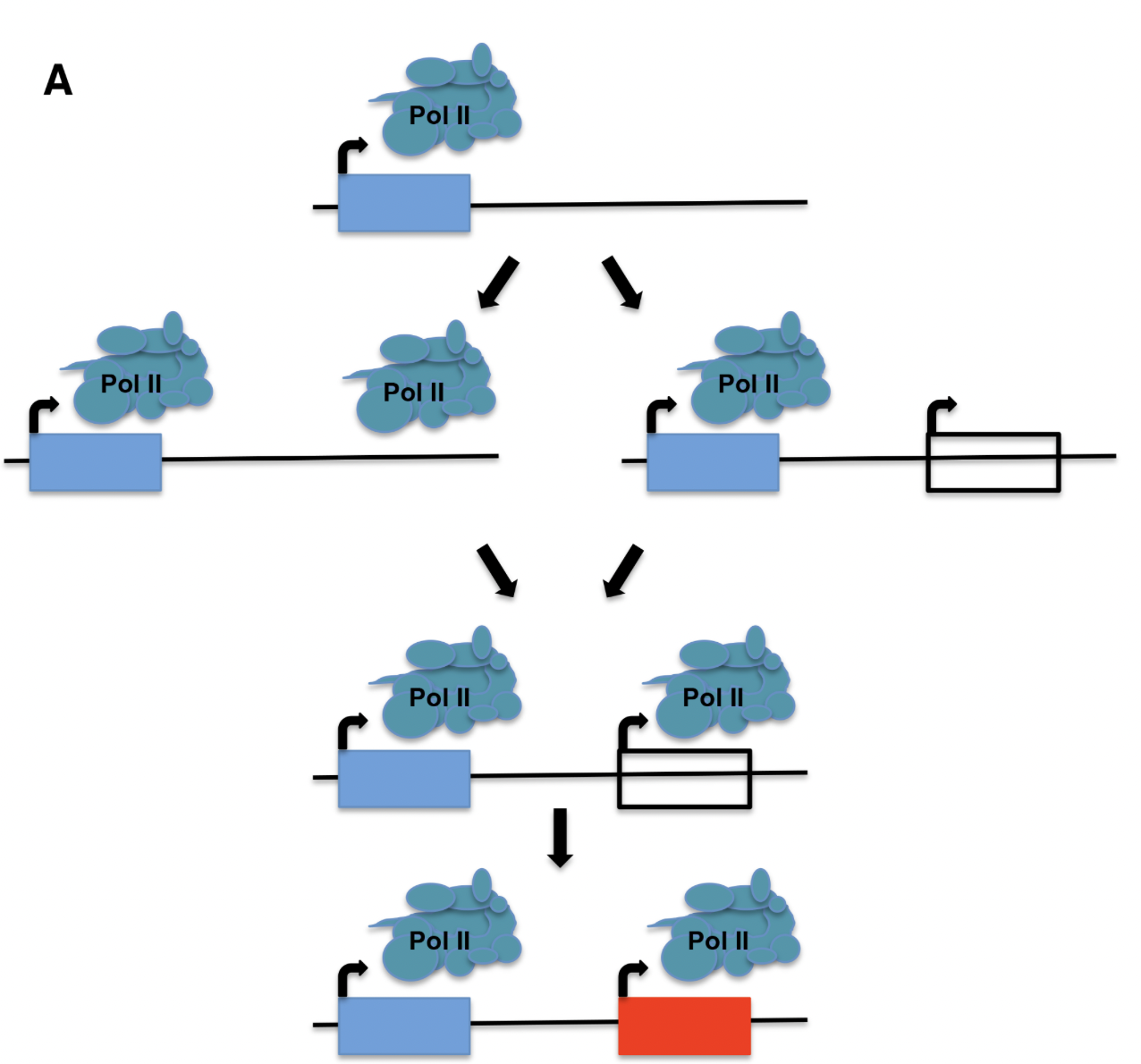
Gene duplication occurs when a DNA sequence essential for survival is accidentally copied during cell division. Because the original gene continues to perform its function, the duplicate copy can accumulate mutations without immediately threatening the organism's survival. Under these circumstances, mutations that would otherwise be detrimental may accumulate at a rapid rate, eventually producing a sequence so divergent that homology with the original gene can no longer be detected (Figure 1).
Fig 1: Formation of an orphan gene through gene duplication. RNA polymerase II transcribes a gene, generating a duplicated copy (white), which subsequently acquires an independent function and becomes an orphan gene (red) (Van Oss and Carvunis).
Critics argue that this explanation lacks sufficient evidence. They contend that the probability of a gene simultaneously losing its original sequence while acquiring a meaningful new function is extremely low. Furthermore, no intermediate sequences demonstrating such a transition have yet been identified (Cho and Kim).
2) Horizontal Gene Transfer
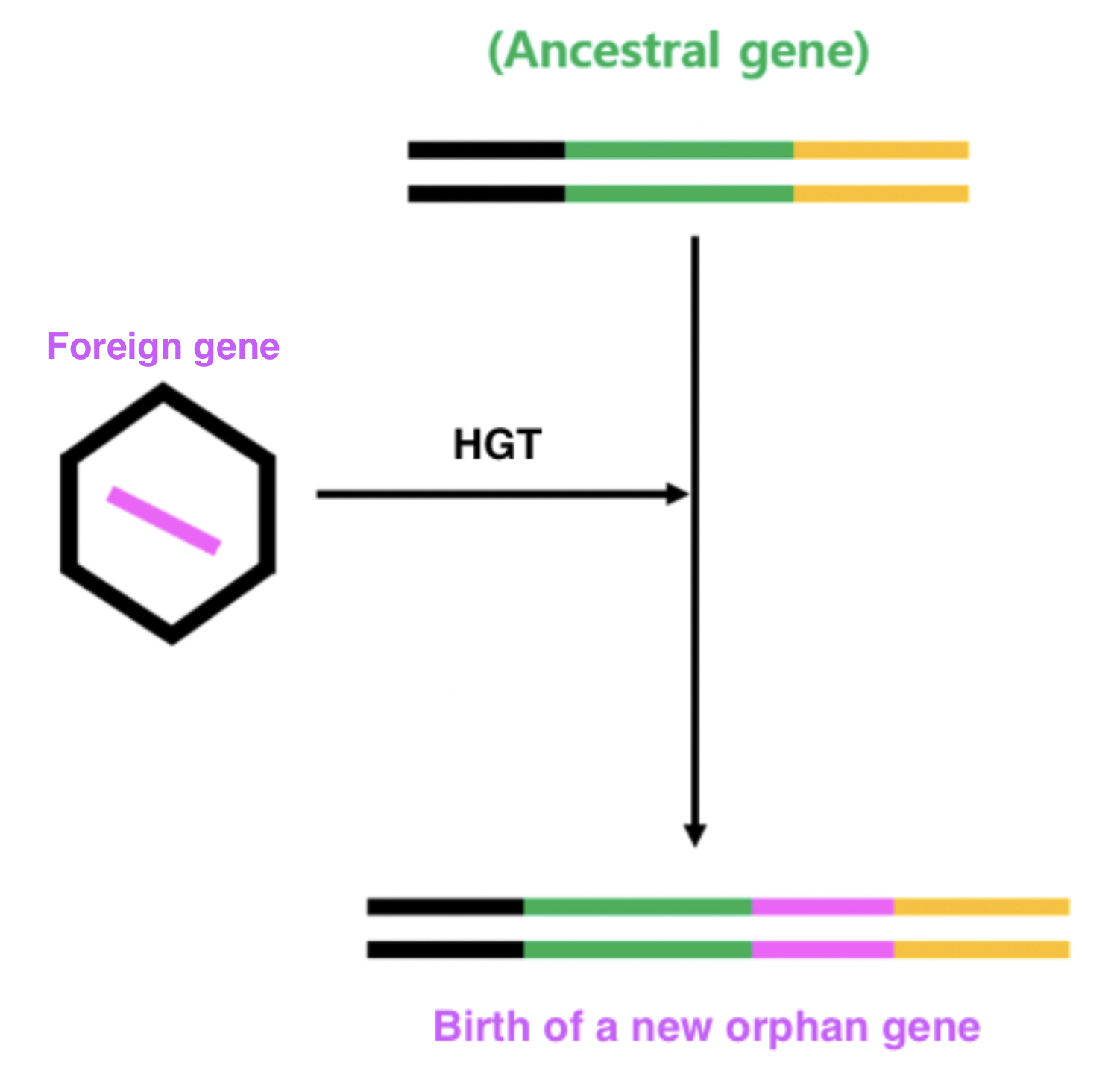
Horizontal gene transfer (HGT) refers to the exchange of genetic material between different organisms (Figure 2). Resistance to a particular antibiotic in one microorganism may be transferred to another organism within the human body. Such events occur relatively frequently in nature and have contributed to the emergence of multidrug-resistant pathogenic bacteria (Kim). When genes are horizontally transferred between different species, it may seem as if DNA of unclear evolutionary origin has emerged.
Fig 2: Horizontal gene transfer and the mechanism of genetic material exchange between different organisms (Cho and Kim).
Critics argue that HGT is difficult to regard as an explanation for orphan genes because, by definition, it involves the transfer of genetic material from another organism. Since the transferred sequence already exists elsewhere, it must necessarily retain homology with another species. Consequently, HGT does not readily account for genes that appear to lack detectable homologs altogether.
3) De Novo Gene Birth
The de novo mechanism refers to the process by which functional protein-coding genes originate from previously non-coding genomic regions. Traditionally, de novo gene birth was considered an evolutionary impossibility. The emergence of a functional gene through these pathways requires the highly coordinated, simultaneous acquisition of both a functional Open Reading Frame (ORF)—including a proper start (ATG) and termination codon—and appropriate cis-regulatory elements, such as a promoter region, to enable transcription. Critics contend that the random assembly of these disparate genetic components into a functional locus yielding a stable, non-toxic protein product is an exceedingly improbable event (Cho and Kim).
4) Transposable Elements
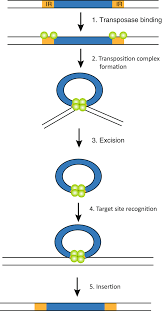
Transposable elements (TEs), or transposons, are DNA sequences capable of moving from one location in the genome to another (Figure 3).
Fig 3: Gene formation mediated by transposable elements. Transposase enzymes (green circles) assemble into a complex, excise a transposable element (blue), and insert it into a target site (Skipper et al.).
Transposable elements constitute a substantial proportion of the genomes of many organisms. More than half of all primate orphan genes are believed to have originated through the incorporation of transposable element sequences (Toll-Riera et al.), and approximately 46% of the human genome consists of transposable elements (Tomkins). Creationist interpretations argue that transposable elements are essential for embryonic development, physiological maintenance, and even the stability of brain function, and therefore should be viewed as "engineered biological systems" (Tomkins). From this perspective, both the statistical improbability and apparent precision of these processes are taken as evidence of intelligent design.
Evolutionary Interpretations and Counterarguments
From an evolutionary perspective, each of the mechanisms described above plays an important role in the formation of orphan genes.
With regard to gene duplication, studies suggest that duplication events occur relatively frequently—approximately 0.01 times per gene per million years, a rate comparable to that of mutation itself. Around 90% of duplicated genes eventually lose their function and become pseudogenes, disappearing over relatively short evolutionary timescales due to strong selective pressures. During this period, duplicated sequences experience fewer functional constraints, allowing mutations that would otherwise be eliminated by natural selection to accumulate rapidly. Over time, these mutations may give rise to orphan genes (Lynch and Conery). In other words, only a small minority of duplicated genes acquire functions that enable them to persist and become incorporated into existing genomic systems through rapid sequence divergence.
Two explanations have been proposed for how horizontal gene transfer (HGT) may contribute to the apparent occurrence of orphan genes. First, the donor species may not yet have been identified. When genetic material is transferred from an uncharacterized microorganism to another organism, homology searches may fail simply because the donor genome is absent from current databases. Given that only approximately 0.000002% of Earth's microbial genomes have been fully sequenced (Maan et al.), many genes currently classified as orphan genes may possess homologs that remain undiscovered within the vast reservoir of microbial dark matter. In this case, HGT does not directly create orphan genes, but rather contributes to their apparent classification. Second, transferred genes may gradually diverge from their ancestral sequences after integration into a new host genome. Because newly acquired genes often experience different selective pressures and genomic environments, their sequences may accumulate changes over evolutionary time. If sufficient divergence occurs, conventional homology-detection methods may fail to recognize shared ancestry, resulting in an apparent orphan gene. Thus, HGT may indirectly contribute to the emergence of orphan-like genes through subsequent sequence divergence and homology-detection failure. Taken together, these mechanisms suggest that HGT is better understood as a process that can generate the appearance of orphan genes rather than one that directly produces genuinely novel genes lacking evolutionary ancestry.
The claim that de novo gene birth is exceedingly improbable can likewise be challenged by recent findings. Numerous studies suggest that the emergence of orphan genes through de novo mechanisms is biologically plausible. For example, more than half of the orphan genes identified in Arabidopsis thaliana appear to have originated through de novo gene birth (Arendsee et al.). Other studies indicate that substantial portions of the genome are actively transcribed, continually generating new candidate genes (Light et al.). Research has also suggested that approximately 5% of primate orphan genes originated through de novo mechanisms (Toll-Riera et al.). This pervasive transcription implies that non-coding sequences do not transform into fully functional, complex genes instantaneously. Instead, they transition through an intermediate stage involving "proto-genes." Carvunis et al. reported the emergence of thousands of species-specific open reading frames (ORFs)—DNA or RNA sequences with the potential to be translated into proteins—from non-coding regions of the yeast genome. These ORFs were found to be differentially regulated under stress conditions and exhibited signatures of preservation by natural selection. Although structurally unstable, such proto-genes may contribute to species adaptation under conditions of rapid environmental change. Furthermore, proteins derived from de novo mechanisms often display distinct biochemical properties; they tend to be shorter and structurally disordered (Light et al.), meaning they lack rigid tertiary structures. This structural flexibility reduces the risk of toxic protein misfolding, allowing newly emerged sequences to be safely tolerated within the cell while occasionally executing novel regulatory functions. Consequently, the combination of pervasive transcription, proto-gene intermediates, and structural tolerance explains how de novo gene birth operates as a viable evolutionary mechanism.
Finally, transposable elements are difficult to interpret as evidence of intelligent design because some of them reduce an organism's chances of survival. Random insertion of transposable elements can destabilize the genome and contribute to genetic disorders such as hemophilia. To date, 124 heritable diseases have been associated with transposable element activity (Hancks and Kazazian). Consequently, transposable elements may be better understood not as products of precise design, but as examples of the dynamic processes of nature and natural selection.
Technical Limitations in Gene Identification
Another important consideration is that some of the genes currently classified as orphan genes may not actually be orphan genes at all. The identification of orphan genes typically relies on a method known as phylostratigraphy, which estimates the evolutionary age of a gene by comparing a given genome against all known sequences and determining how broadly similar sequences are distributed across different taxa. However, phylostratigraphy is highly susceptible to misclassifying gene age because its accuracy is strongly influenced by rates of sequence evolution. As a result, many orphan genes may in fact represent false positives. When genes evolve too rapidly, homology-detection algorithms may fail to recognize shared ancestry between sequences that originated from the same ancestral gene. This phenomenon is known as homology detection failure (HDF). Accurate identification of orphan genes therefore requires HDF correction as well as access to high-quality genomic datasets (Pereira et al.).
Another recent study sought to improve the reliability of orphan gene identification by implementing a rigorous four-step screening process consisting of genome assembly quality assessment, deep homology searches, gene-context and synteny analyses, and verification of transcriptional and translational activity. Upon reanalysis, 81% of previously identified orphan genes were reclassified as ordinary genes within only two years. Although this proportion varies considerably depending on the organism and its ecological environment, the fact that such a large number of genes lose their orphan status suggests that much of the current debate surrounding orphan genes is rooted in technical limitations. Consequently, the authors of that study recommended using terms such as “candidate” or “putative” rather than prematurely labeling genes as “orphan” genes (Maan et al.).
Furthermore, the same study estimated that only approximately 0.000002% of all microbial species on Earth have had their genomes fully sequenced. As discussed previously, this strongly suggests that many genes currently classified as orphan genes may in fact belong to what has been termed “microbial dark matter” (Maan et al.). Given the enormous number of genomic sequences that remain uncharacterized, it may be premature to conclude that a particular sequence lacks homologs in all other organisms. Although this does not necessarily invalidate the existence of orphan genes altogether, it constitutes a substantial challenge to the reliability of many current classifications. Given its comprehensive four-step screening framework, this recent study provides the most methodologically rigorous assessment to date, lending high credibility to its findings.
Further Discussion on Evolutionary Challenges
Based on the preceding analysis, several anticipated criticisms warrant further discussion.
1) Essential Orphan Genes
Some studies have reported the existence of orphan genes whose removal severely compromises survival or reproduction. For example, the deletion of certain genes believed to have arisen through de novo mechanisms in Drosophila has been shown to cause complete sterility or significantly reduce sperm production (Gubala). Such findings are often regarded as inconsistent with the notion that orphan genes are relatively recent evolutionary innovations. If these genes emerged only recently, how could they have acquired essential biological functions, and how did ancestral organisms survive before these genes became fully developed?
However, orphan genes rarely perform indispensable functions immediately upon their emergence. Instead, they may initially serve minor roles, such as enhancing survival under specific environmental conditions. Over time, as environmental pressures change, these genes may gradually become integrated into existing genetic systems and assume increasingly important functions (Carvunis et al.; Light et al.). Furthermore, if an orphan gene contributes to a more efficient biological process, previously utilized pathways may become less important over evolutionary time. Under such circumstances, dependence on the orphan gene may increase, potentially helping to explain why some orphan genes appear indispensable today (Chen et al.).
2) Genetic Entropy
Genetic entropy refers to the idea that genes, like all systems subject to entropy, inevitably deteriorate over time. According to this argument, the accumulation of genetic information within non-coding regions cannot occur under the Second Law of Thermodynamics. Consequently, proponents contend that the existence of orphan genes can only be explained through the intervention of an intelligent designer.
However, this argument overlooks a crucial assumption of the Second Law of Thermodynamics: the concept of an isolated system. Living organisms are neither isolated nor closed systems; rather, they are quintessential open systems. The idea that living organisms maintain internal order and regulate entropy through continuous energy exchange was proposed as early as Schrödinger. Through the ongoing intake of energy, organisms are capable of maintaining order and reducing internal entropy. Therefore, the continued accumulation of information within orphan genes presents no thermodynamic difficulty. On the contrary, it is both plausible and logically consistent when the characteristics of living systems are taken into account. Mechanisms such as DNA repair and mutation resistance may be understood as processes that contribute to the reduction of entropy.
3) The Probability of Mutation
Because orphan genes are generally thought to arise through a series of highly contingent events, some critics argue that the probability of generating sequences beneficial to an organism is exceedingly low.
What is important to recognize, however, is that evolution is not driven solely by random processes. The formation and maintenance of orphan genes are strongly influenced by natural selection and the selective pressures that accompany it (Lynch and Conery). Although genetic mutations and gene duplication events occur randomly—and although most resulting sequences are either functionless or harmful—any sequence that confers even a slight survival advantage is likely to be preserved by natural selection. In this sense, orphan genes may be understood as the cumulative outcome of positive selection operating across countless generations.
Limitations of the Study
Despite efforts to develop and refine the arguments presented in this paper as thoroughly as possible, several limitations remain.
First, research on orphan genes continues to produce conflicting findings, highlighting significant technological and methodological limitations within the field. Given that only approximately 0.000002% of microbial genomes have been fully characterized and that nearly 81% of previously identified orphan genes have been reclassified as false positives upon reexamination, the field remains open to further investigation and debate. Future research should therefore focus on developing more reliable methods for distinguishing genuine orphan genes from ordinary genes affected by homology detection failure.
Second, if the findings of Pereira et al. and Maan et al.—namely, that the true number of orphan genes is substantially lower than previously estimated—are broadly applied, some arguments supporting evolutionary explanations may also be weakened. For example, claims that more than half of primate orphan genes originated through the incorporation of transposable-element sequences become less persuasive if many of those genes were not actually orphan genes in the first place. Consequently, the possibility of methodological error within existing studies cannot be ruled out, and further specialized research is required.
Third, most of the studies cited in this paper were conducted under laboratory conditions. As a result, they may not fully reflect the complex ecological pressures present in natural environments. Conversely, laboratory-specific stressors may have influenced patterns of orphan gene expression in ways that differ from those observed in the wild. Because laboratory settings cannot perfectly replicate all aspects of natural ecosystems, it remains possible that differences in gene expression affected the results of these studies in meaningful ways. This limitation should be taken into account when interpreting the findings discussed throughout this paper.
Conclusion
In conclusion, this literature review suggests that evolutionary theory can defend itself against the challenge posed by orphan genes through two primary lines of reasoning.
First, many genes previously classified as orphan genes were likely misidentified due to technical limitations and insufficient depth of genomic analysis. Furthermore, considering the vast expanse of uncharacterized microbial dark matter previously discussed, it is reasonable to suggest that many genes currently regarded as orphan genes may in fact possess homologous sequences that have simply not yet been discovered. From this perspective, the apparent uniqueness of many orphan genes may reflect the incompleteness of current genomic databases rather than genuine evolutionary isolation.
Second, even in cases where genes can reasonably be classified as true orphan genes, their existence can be explained through mechanisms such as de novo gene birth, horizontal gene transfer, and rapid sequence divergence. Considering that many previously identified orphan genes have since been shown to result from homology detection failure, it is likely that additional genes will lose their orphan status as genomic technologies continue to improve. Consequently, the number of orphan genes does not appear to exceed the explanatory scope of existing evolutionary mechanisms.
The initial hypothesis of this study was as follows: Orphan genes do not fundamentally undermine evolutionary theory, but their existence suggests the need for theoretical refinement beyond the traditional accumulation of mutations.
Based on the evidence and literature examined in this study, however, a different conclusion emerges: The existence of orphan genes does not contradict the central principles, explanations, or logical framework of evolutionary theory. Rather, orphan genes serve as an illustrative example of the complexity, adaptability, and dynamic nature of evolutionary processes.
This study also demonstrates that scientific progress often proceeds through a dialectical process in which competing explanations are proposed, challenged, and subsequently refined. Throughout the course of this research, several studies and findings were encountered that differed substantially from the initial hypothesis. Engaging with this evidence ultimately led to a revised conclusion.
Although current evolutionary explanations appear capable of accounting for the existence of orphan genes, this does not preclude the possibility that future theories may offer more comprehensive explanations. New evidence may emerge that challenges existing interpretations, or new theoretical frameworks may be developed that account for orphan genes more completely than current models. For this reason, the conclusions presented in this paper should not be regarded as absolute truths, but rather as provisional conclusions based on the evidence and scholarly consensus currently available.
Ultimately, the most important principle is the maintenance of a balanced and rational perspective, coupled with a willingness to engage openly with competing viewpoints. When evidence emerges that conflicts with existing beliefs or assumptions, it is necessary to evaluate carefully how that evidence interacts with established theories and, when warranted, to revise one's conclusions accordingly.
Works Cited
Arendsee, Zebulun W., Ling Li, and Eve Syrkin Wurtele. "Coming of Age: Orphan Genes in
Plants." Trends in Plant Science 19, no. 11 (2014): 699-708. Accessed February 12,
2026. https://www.cell.com/trends/plant-science/fulltext/S1360-1385(14)00193-9.
Carvunis, Anne-Ruxandra, et al. "Proto-genes and De Novo Gene Birth." Nature 487, no.
7407 (2012): 370-74. Accessed February 12, 2026.
https://pubmed.ncbi.nlm.nih.gov/22722833/.
Chen, Sidi, Yong E. Zhang, and Manyuan Long. "New Genes in Drosophila Quickly Become
Essential." Science 330, no. 6011 (2010): 1682-85. Accessed June 24, 2026.
https://www.science.org/doi/10.1126/science.1196380.
Cho, K., and K. Kim. "Controversies Surrounding the Origin of Orphan Genes and
Perspectives on Subsequent Orphan Gene Research." Proceedings of the Korean
Association of Biological Sciences 2024, no. 8 (2024): 112-13. Accessed March 4,
2026.
https://www.dbpia.co.kr/pdf/pdfView.do?nodeId=NODE11759150&width=1500.
Dujon, Bernard. "The Yeast Genome Project: What Did We Learn?" Trends in Genetics 12,
no. 7 (1996): 263-70. Accessed February 12, 2026.
https://pubmed.ncbi.nlm.nih.gov/8763498/.
Gubala, Anna M., et al. "The Goddard and Saturn Genes Are Essential for Drosophila Male
Fertility and May Have Arisen De Novo." Molecular Biology and Evolution 34, no. 5
(2017): 1066-82. Accessed March 4, 2026.
https://academic.oup.com/mbe/article/34/5/1066/2927950.
Hancks, Dustin C., and Haig H. Kazazian Jr. "Roles for Retrotransposon Insertions in Human
Disease." Mobile DNA 7, no. 9 (2016): 1-18. Accessed March 15, 2026.
https://pubmed.ncbi.nlm.nih.gov/27158268/.
Kim, H. "Construction of the World's Largest Database of Microbial Horizontal Gene
Transfer Events." Seoul National University. Last modified November 24, 2022.
Accessed March 15, 2026.
https://www.snu.ac.kr/research/highlights?md=v&bbsidx=138873.
Light, Sara, Walter Basile, and Arne Elofsson. "Orphans and New Gene Origination: A
Structural and Evolutionary Perspective." Current Opinion in Structural Biology 26
(2014): 25-33. Accessed April 2, 2026.
https://www.sciencedirect.com/science/article/abs/pii/S0959440X14000608.
Lynch, Michael, and Timothy S. Conery. "The Evolutionary Fate and Consequences of
Duplicate Genes." Science 290, no. 5494 (2000): 1151-55. Accessed February 12,
2026. https://doi.org/10.1126/science.290.5494.1151.
Maan, Sheetalpreet K., et al. "Candidate Orphan Genes: Reassessing Uniqueness." PLOS
ONE 20, no. 4 (2025): e0338891. Accessed April 2, 2026.
https://journals.plos.org/plosone/article?id=10.1371/journal.pone.0338891.
Moody, Edmund R., et al. "The Nature of the Last Universal Common Ancestor and Its
Impact on the Early Earth System." Nature Ecology & Evolution 8, no. 7 (2024):
1654-66. Accessed April 2, 2026.
https://www.nature.com/articles/s41559-024-02461-1.
Pereira, Andres Barboza, et al. "Orphan Genes Are Not a Distinct Biological Entity."
BioEssays 46, no. 6 (2024): e2400146. Accessed April 14, 2026.
https://onlinelibrary.wiley.com/doi/full/10.1002/bies.202400146.
Schrödinger, Erwin. What Is Life? The Physical Aspect of the Living Cell. Cambridge
University Press, 1944.
Skipper, K. A., et al. "DNA Transposon-Based Gene Vehicles - Scenes from an Evolutionary
Drive." Journal of Biomedical Science 20, no. 1 (2013): 92. Accessed March 17,
2026. https://jbiomedsci.biomedcentral.com/articles/10.1186/1423-0127-20-92.
Toll-Riera, Macarena, et al. "Origin of Primate Orphan Genes: A Comparative Genomics
Approach." Molecular Biology and Evolution 26, no. 3 (2008): 603-12. Accessed
February 15, 2026. https://academic.oup.com/mbe/article/26/3/603/977256.
Tomkins, Jeffrey P. "Newly Discovered 'Orphan Genes' Defy Evolution." Institute for
Creation Research. Last modified August 26, 2013. Accessed April 19, 2026.
https://www.icr.org/content/newly-discovered-orphan-genes-defy-evolution.
---. "Transposable Elements: Genomic Parasites or Engineered Design?" Institute for
Creation Research. Last modified August 31, 2023. Accessed April 20, 2026.
https://www.icr.org/content/transposable-elements-genomic-parasites-or-engineered-d
esign.
Van Oss, Stephen Branden, and Anne-Ruxandra Carvunis. "De Novo Gene Birth." PLoS
Genetics 15, no. 5 (2019): e1008160. Accessed March 15, 2026.
https://journals.plos.org/plosgenetics/article?id=10.1371/journal.pgen.1008160.
RESEARCH MATERIALS
Figures & Photographs
Visual materials accompanying the original research.