YOONCHAN WRITES / RESEARCH
Resource Cycling and Stability in a Closed Ecosystem
Biology
Biology Research Report
Final Report
Research Topic: Analysis of Resource-Cycling Mechanisms in a Sealed Ecosystem and Investigation of System Stability under Different Levels of Energy Input
Dream School, Grade 12, Class 5, Gippeum Woo Yoonchan
1. Abstract
This study was designed to implement and understand the abstract, theoretical concept of a “closed system” in a tangible, real-world setting. Although finding a perfectly closed system in reality is difficult, I wanted to determine whether an ecosystem could maintain homeostasis without the inflow of matter by using a “sealed terrarium” that permits energy exchange while restricting the movement of matter. I chose this topic to observe energy flows within the system firsthand and gain scientific insight. For the experiment, I constructed two sealed terrariums, placed them in different environments, and observed and recorded their conditions over 11 weeks. Despite the lengthy observation period, however, I concluded that the experiment could not yield a meaningful conclusion because of serious flaws in its design. Although I could not directly answer the hypotheses, the lessons learned from this experiment can be applied to future research to obtain more successful results.
2. Table of Contents
Abstract
Table of Contents
Introduction
1. Background, purpose, and significance of the investigation
2. Review of previous studies, definition of terms, and establishment of criteria
Main Discussion
1. Research question and hypotheses
2. Experimental design
A. Experimental materials
B. Control of variables
C. Measurement methods
3. Experimental log
4. Experimental results
A. Establishing the environment and stabilizing the system (Weeks 1–3)
B. Changes in condition following variable control (Weeks 3–7)
C. Observations of changes under prolonged sealing (Weeks 9–11)
Conclusion
1. Analysis of experimental results
A. Transpiration and the water cycle
B. Failure to control variables and the appearance of fruit flies
C. Incomplete sealing
2. Limitations of this study
A. Incomplete sealing
B. Excessive moisture
C. Failure to control soil variables
D. Contradiction with the definition of a “closed system”
3. Possible improvements
A. Ensuring airtightness
B. Balancing resources
C. Sterilization
References and Appendix
3. Introduction
Background, Purpose, and Significance
Unlike humans, who continuously depend on external resources and energy, I have long been fascinated by independent systems that remain isolated from their surroundings and sustain themselves through internal cycles. I chose this topic to determine whether an ecosystem can maintain homeostasis without an inflow of matter and to observe its internal energy flows directly, thereby gaining scientific insight.
The foremost reason for conducting this investigation, as noted above, is to explore the abstract concept of a “closed system.” Directly observing and studying a concept previously encountered only in textbooks and theory can help me not only understand that concept but also develop my scientific thinking. Earth itself can be regarded as a nearly closed system in which the movement of matter is restricted, so the experiment may also provide a basic understanding of Earth's cycling systems.
On a smaller scale, planning a terrarium experiment, which requires a highly precise design, can also provide practical experience with experimental methodology.
Review of Previous Studies, Terminology, and Criteria
Before beginning the study, I examined David Latimer's long-term sealed-terrarium experiment, which began in 1960, as evidence that resources can cycle within a sealed system. In 1960, he planted a spiderwort shoot in a large glass bottle and supplied it with water, then maintained the bottle in an almost completely sealed state for more than 60 years. His artificial ecosystem, which has flourished inside the bottle for decades, provides a benchmark for evaluating the success of closed-system experiments.
The difference between his terrarium and mine is that my experiment deliberately controls variables to test specific hypotheses. I created two containers—a control and an experimental group—and placed them in different environments to test those hypotheses.
I also examined the failure of Biosphere 2, an attempt to establish an artificial sealed ecosystem, and designed this experiment with an awareness that imbalances in material cycling can cause a system to collapse. Biosphere 2 was an attempt in the Arizona desert to create a self-sufficient artificial ecosystem supporting eight humans and 3,000 species. It experienced major failures involving oxygen depletion, ecological imbalance, and insufficient sunlight.
Key Ecological Mechanisms Plant transpiration: Plants release moisture into the atmosphere through stomata in a process called transpiration. Inside a sealed container, the released moisture condenses on the glass walls. The condensed droplets then flow back into the soil and are absorbed by the roots. This physical and biological water-cycling mechanism plays an essential role in maintaining system homeostasis.
Photosynthesis and cellular respiration: Through photosynthesis, plants consume carbon dioxide and water and produce oxygen and glucose. Conversely, in the absence of sunlight, they consume oxygen and release carbon dioxide through cellular respiration. Thus, in a closed system, the rate of photosynthesis must exceed the rate of respiration for the ecosystem to be maintained.
4. Main Discussion
Research Question and Hypotheses
In accordance with the topic, “Analysis of Resource-Cycling Mechanisms in a Sealed Ecosystem and Investigation of System Stability under Different Levels of Energy Input,” this study addresses the following research question: “Through what mechanisms does water circulate within a sealed ecosystem completely isolated from external matter, and can that circulation contribute to maintaining the system's homeostasis?”
The study established two hypotheses:
Hypothesis 1: In a closed system, water will circulate indefinitely through transpiration and condensation, maintaining the system's homeostasis.
Hypothesis 2: In the experimental group deprived of energy (light), the failure of plant photosynthesis will increase carbon dioxide concentration and cause the system to collapse.
Experimental Design
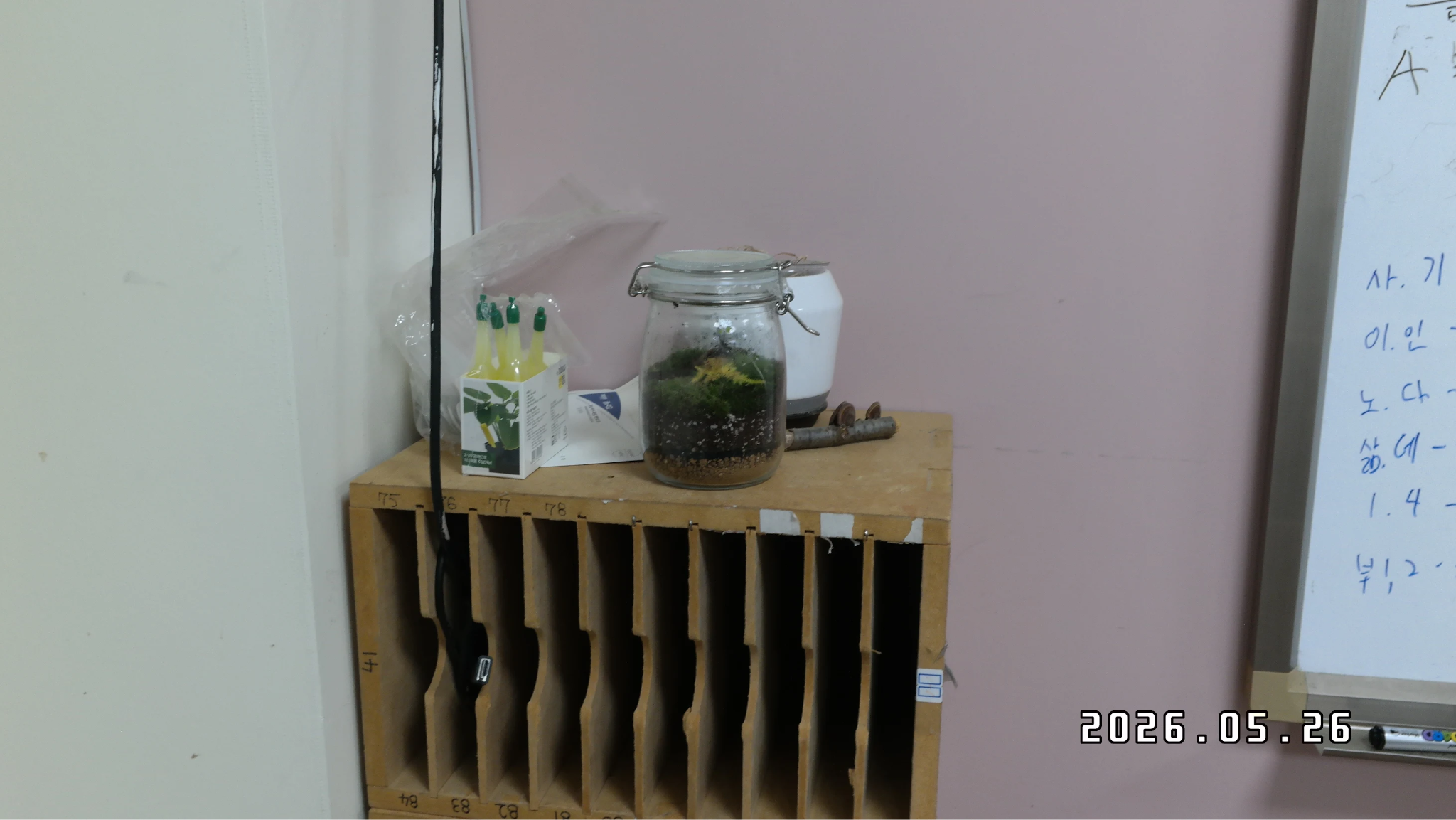
A. Materials: Two glass jars, potting soil, coarse sandy soil, activated charcoal, moss, Asparagus nanus, and a camera.
B. Terrarium construction
Arrange the layers from the bottom upward in the following order: coarse sandy soil > activated charcoal > potting soil.
Divide the Asparagus nanus plant into two portions and plant one in each jar.
Lay moss evenly across the surface of the potting soil.
Add a fixed quantity of water.
Place plastic film over the opening and close the lid to form a seal.
C. Control of variables
Close the lids and cover them with plastic film to prevent air from entering.
Control group (A): Place near a sunny window (ample energy supply).
Experimental group (B): Place in a shaded location with almost no light (restricted energy supply).
D. Measurement methods
Collect data every Monday and Thursday.
Quantitative records: Changes in plant height and number of leaves.
Qualitative records: Amount of condensation on the jar walls (high/medium/low), changes in leaf color (browning), presence or absence of mold, and overall condition of the moss.
Amount of condensation:
(High)
Experimental Log
Experimental Results
A. Establishing the Environment and Stabilizing the System (Weeks 1–3)
Experimental conditions: Both the control and experimental groups were kept in the same location for the first two weeks to stabilize their internal environments.
Observations: I suspected that too much water had been added initially. To prevent excessive moisture, I opened both jars for five hours on Thursday of Week 2. On Monday of Week 3, mold was discovered inside. I removed it with tweezers and treated the area with hydrogen peroxide.
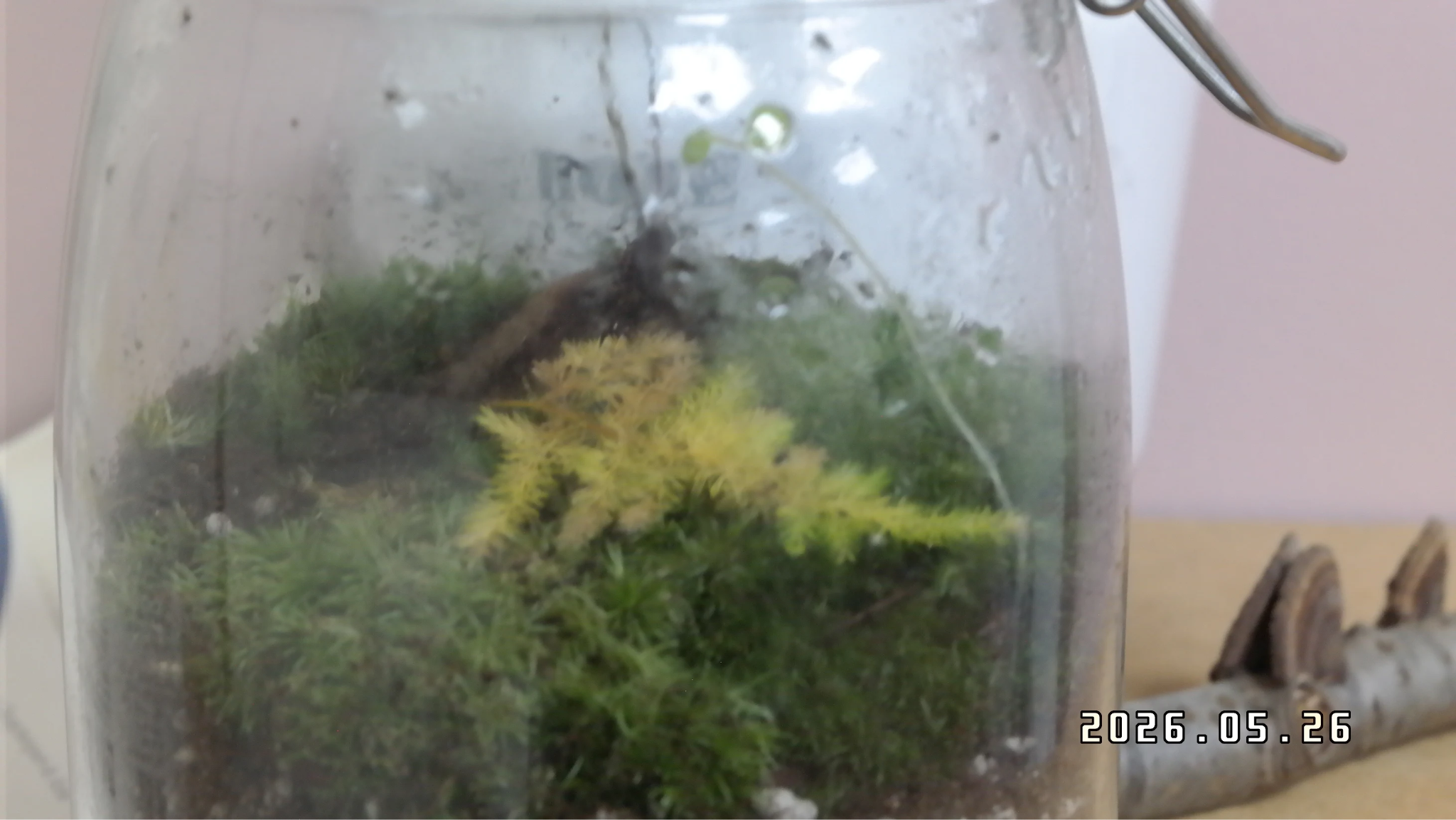
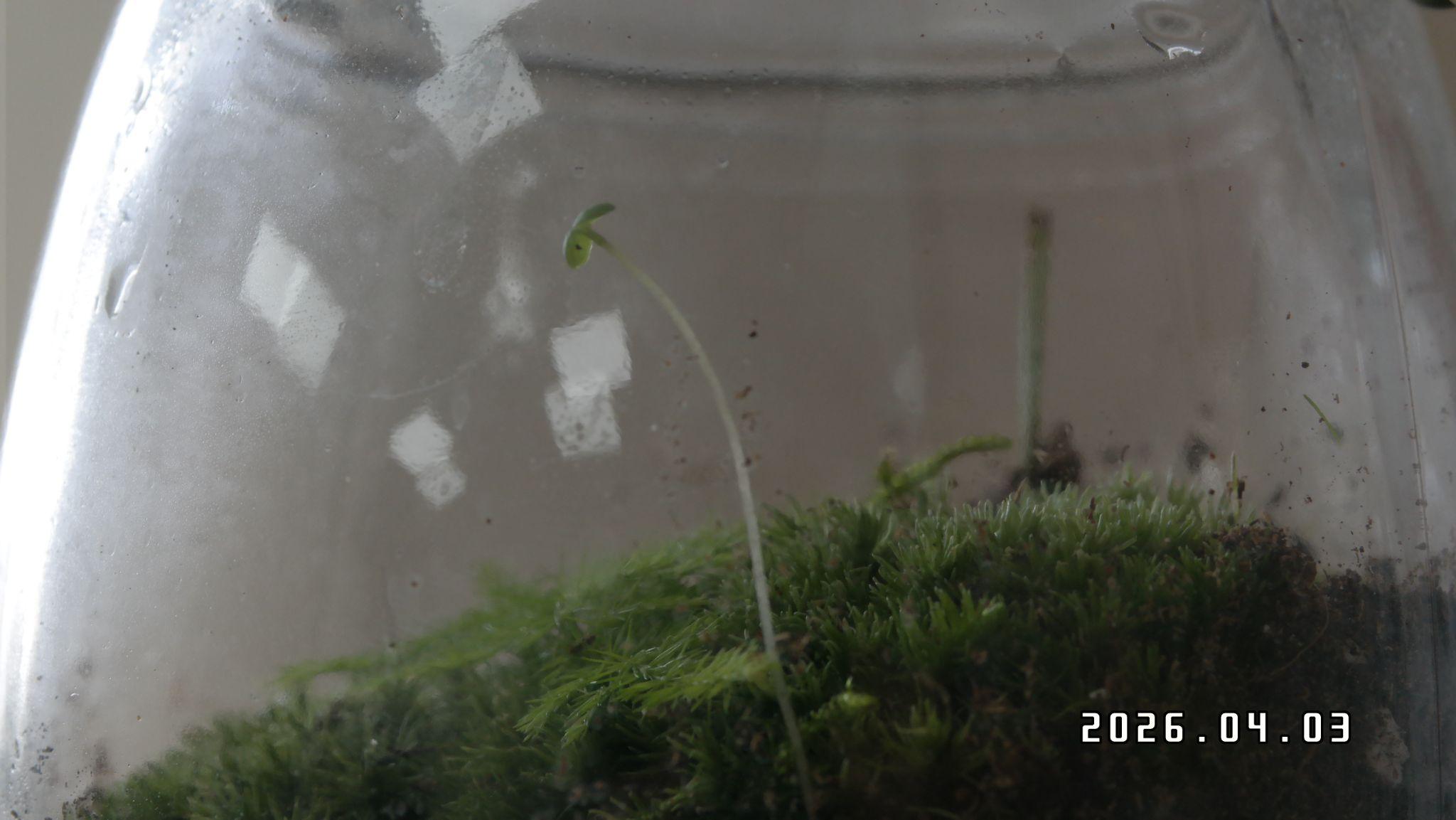
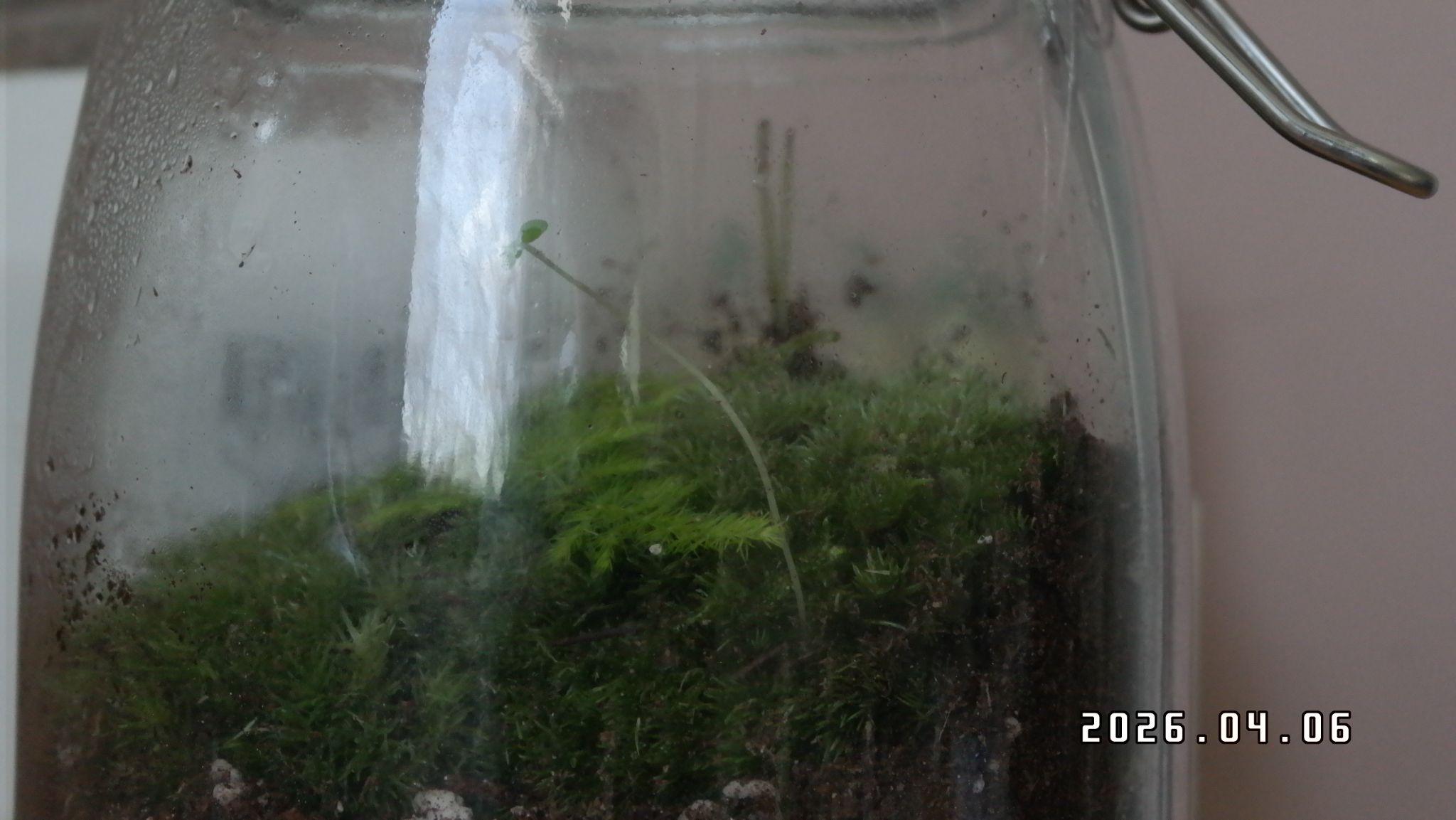
Special observation: An unintended new shoot began sprouting in the control group.
B. Changes in Condition Following Variable Control (Weeks 3–7)
On Thursday of Week 3, the experimental group was moved to a cool location without light, marking the beginning of deliberate variable control.
Experimental group (light blocked):
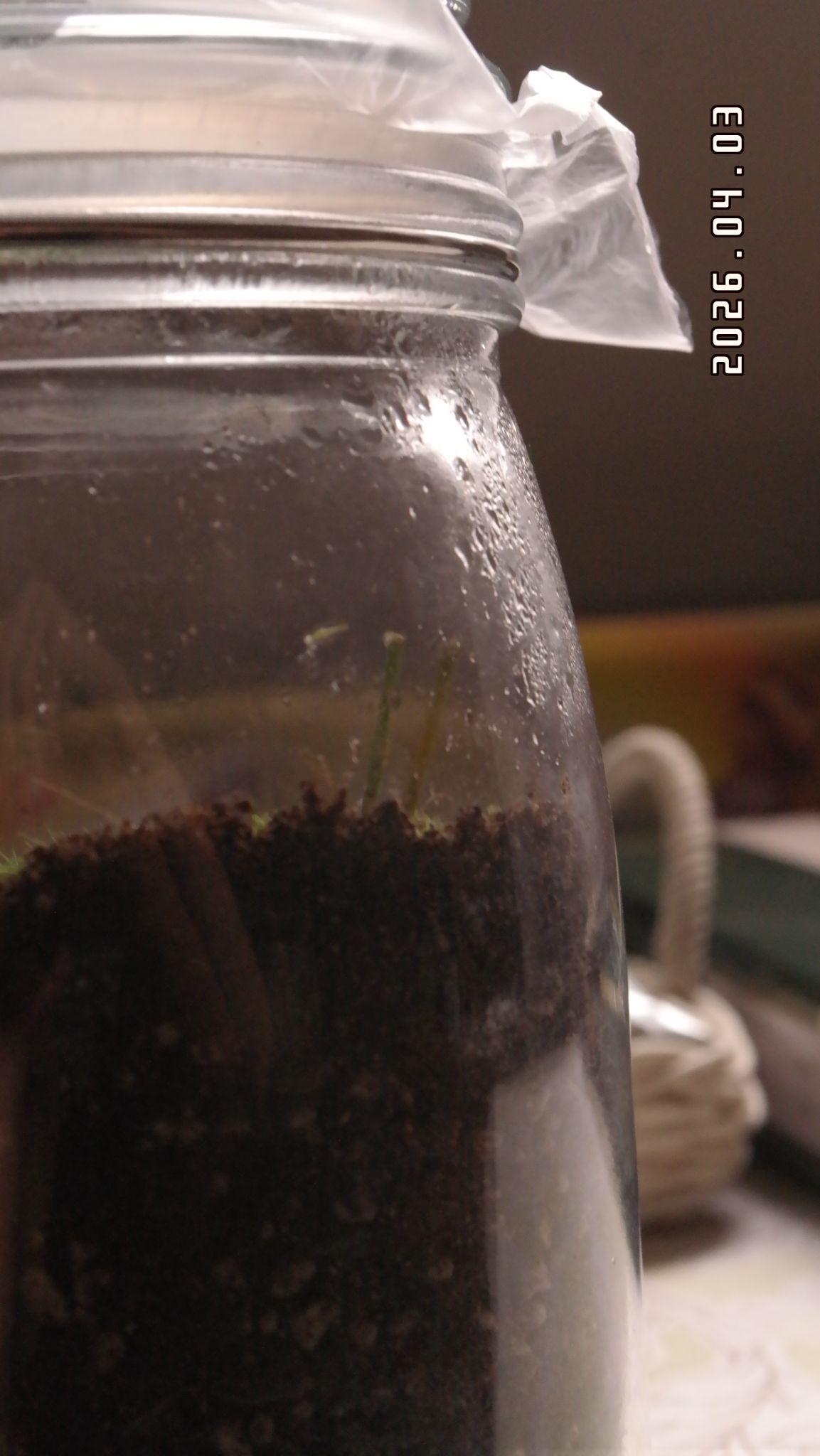
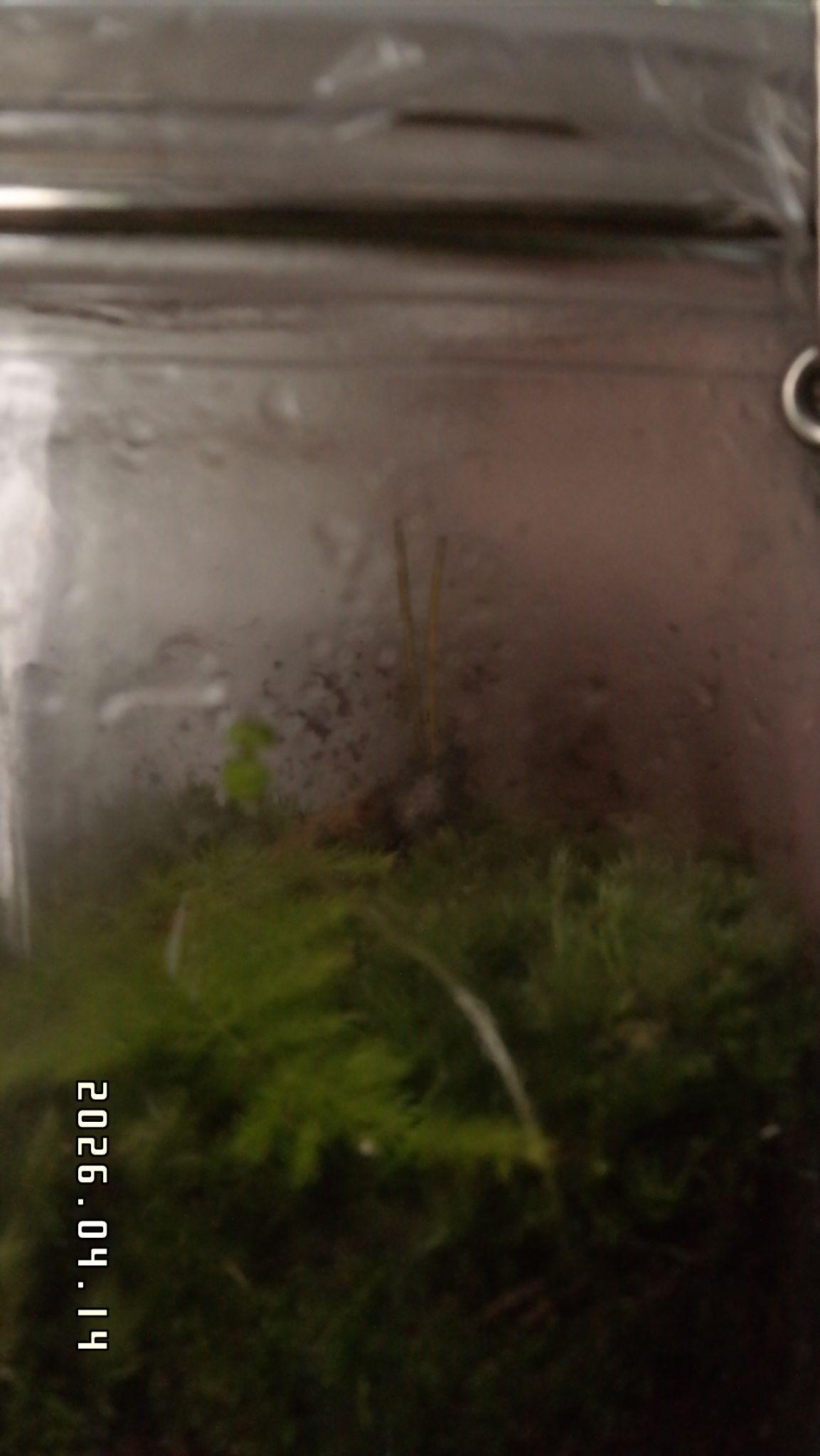
Internal humidity: Beginning in Week 4, immediately after the environmental change, condensation fell sharply to the “low” level. From Week 5 onward, no condensation was observed at all.
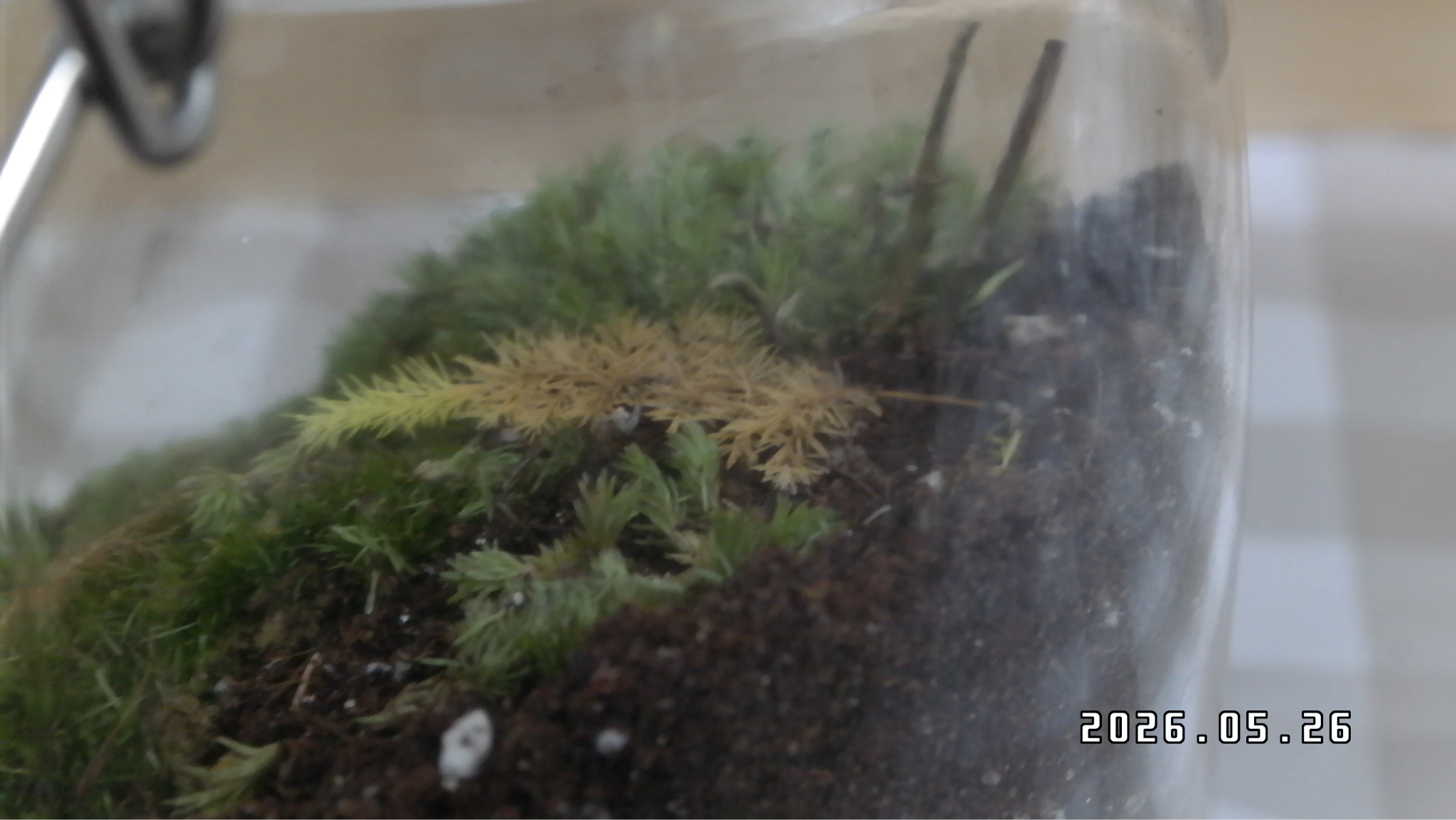
Plant condition: Localized browning of the moss and browning of Asparagus nanus stems began in Week 3. By Week 6, the moss had faded and dried throughout, and browning intensified in the leaves of the cut Asparagus nanus.
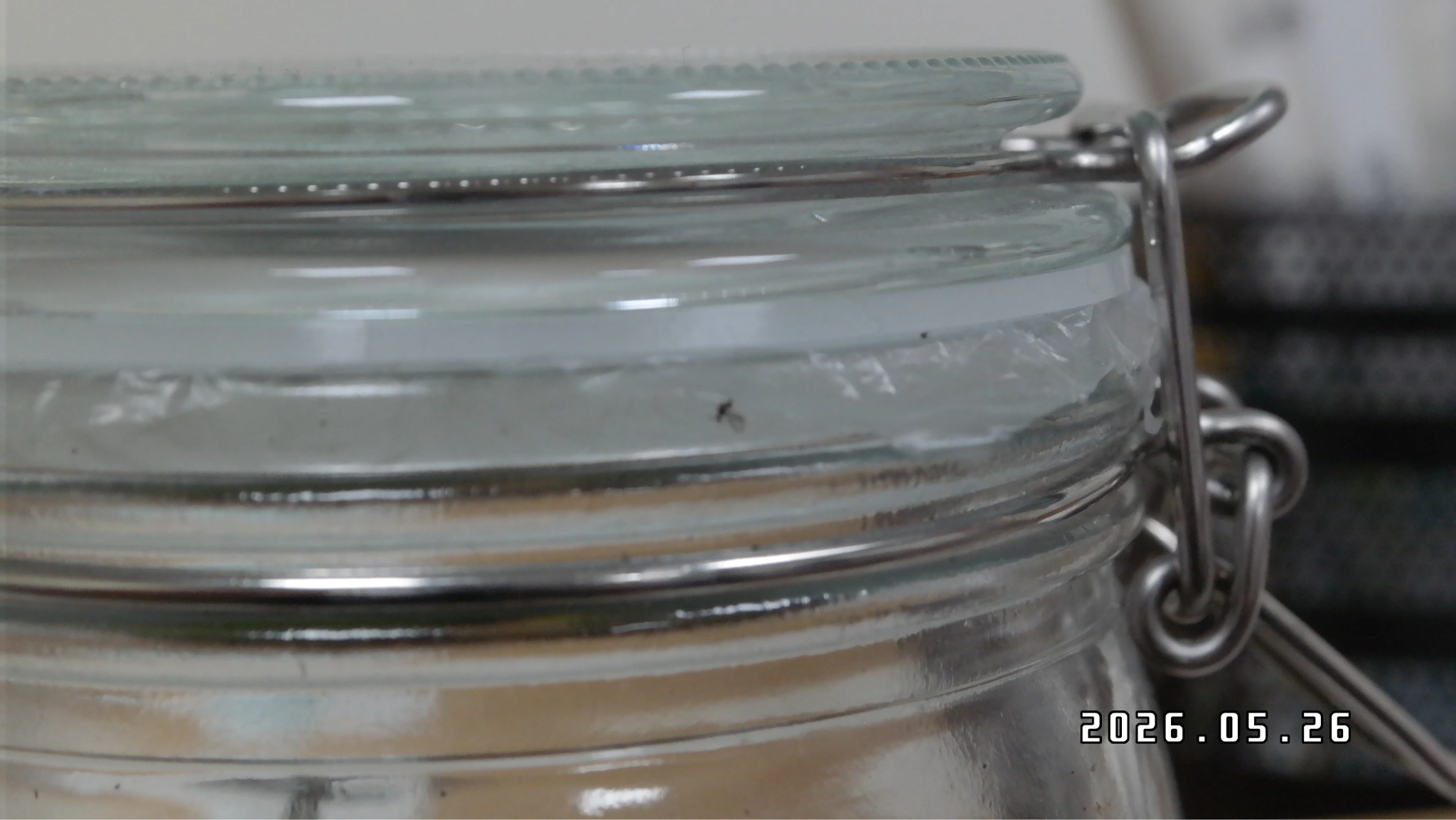
Organisms: Two living fruit flies were observed inside the container in Week 5, but both had died by the following Thursday. In Week 6, a mold colony was observed on the surface of an Asparagus nanus stem.
Control group (light supplied):
Internal humidity: Condensation remained at “high” or “medium-high” levels inside the container.
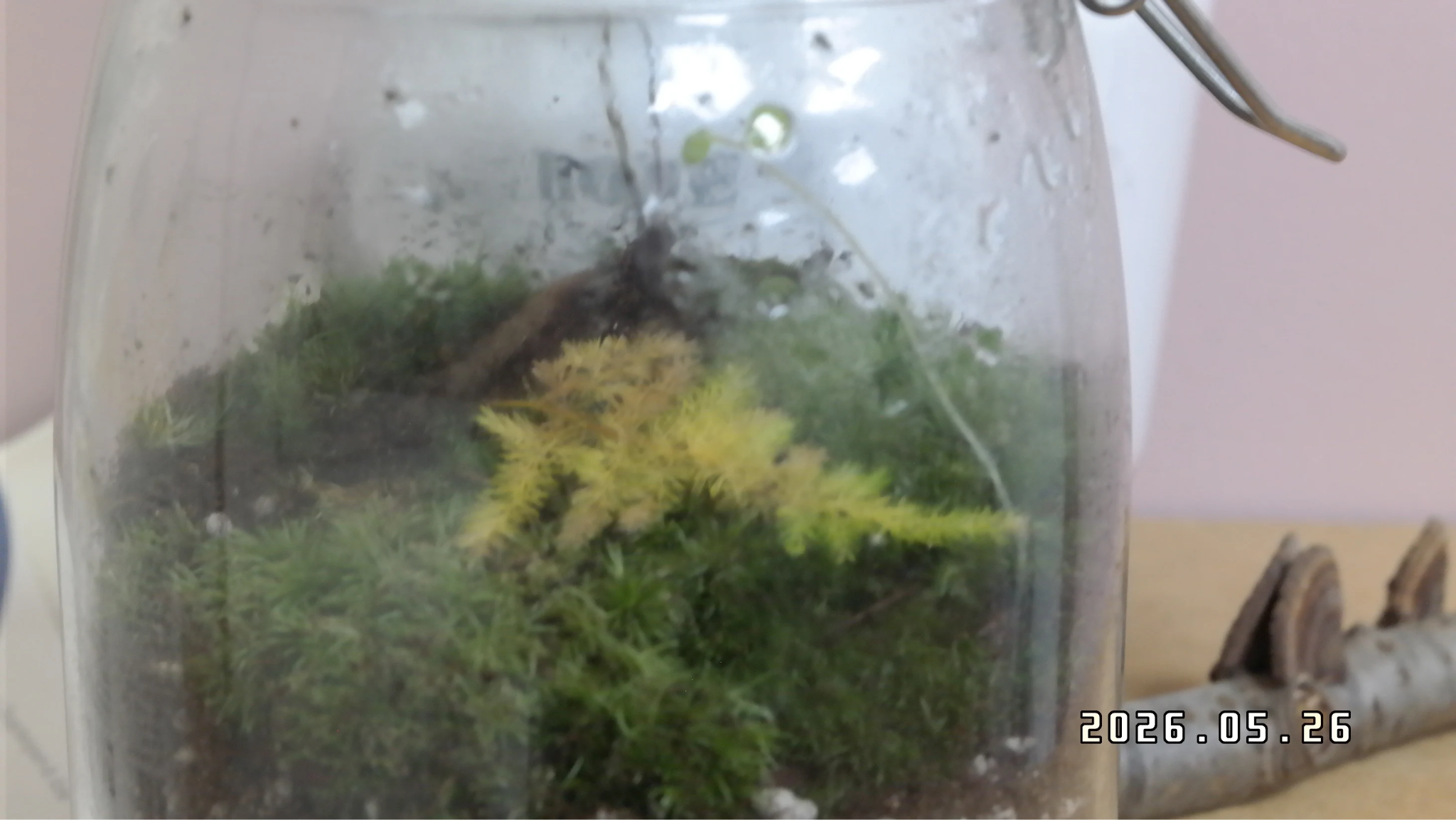
Plant condition: The moss remained dark green and continued growing. The newly germinated shoot also increased in height each week and continued to grow. In contrast, browning began at the tips of Asparagus nanus leaves in Week 4 and became more severe over time.
Changes in organisms: Mold was found near an Asparagus nanus stem in Week 5, and the colony expanded through Weeks 6–7.
C. Observations of Changes under Prolonged Sealing (Weeks 9–11)
After the Week 8 school break, I observed the final condition of each group following prolonged sealing.
Experimental group (light blocked): No condensation was observed. By Week 10, the growth point and one of the two leaves of the Asparagus nanus had completely decayed and turned brown. In Week 10, the number of actively moving fruit flies rose sharply to six or seven. In Week 11, a spider was also discovered.
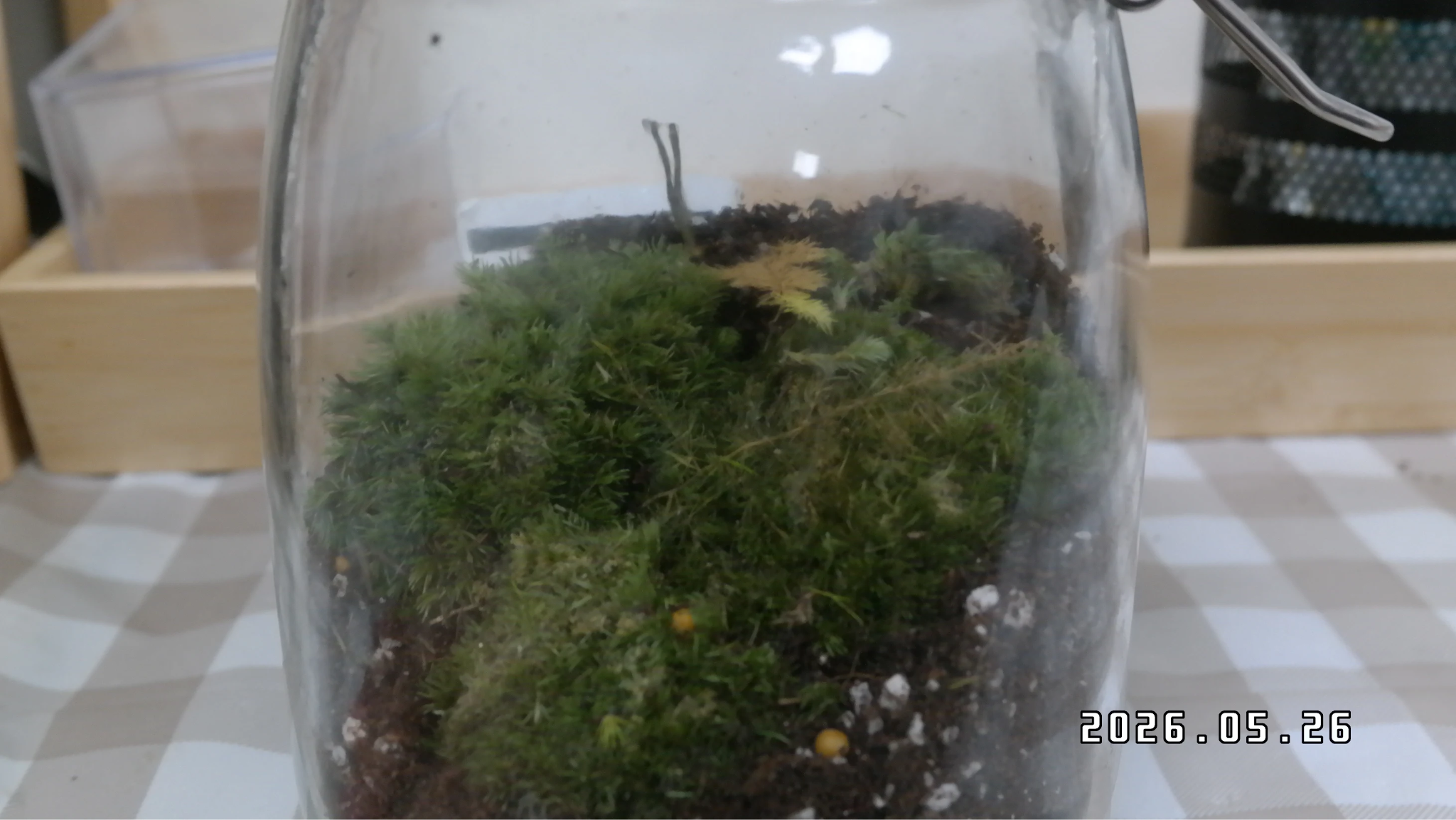
Control group (light supplied): Condensation remained at “high” to “medium” levels. The new shoot continued growing without visible problems, and the moss remained dark green overall. However, browning of Asparagus nanus leaves continued. Existing mold colonies became smaller while new colonies formed elsewhere inside the container.
5. Conclusion
Analysis of Experimental Results
A. Transpiration and the Water Cycle
In the control group, condensation remained at a “high” level throughout the 11 weeks. In contrast, condensation in the experimental group began decreasing sharply within one week of blocking light. This suggests that plant transpiration is strongly influenced by the supply of light energy. Although moss may have circulated water through transpiration, I believe that simple evaporation and condensation probably accounted for a larger proportion of the cycling. Water continued to circulate normally in the control group, whereas the water-cycling mechanisms associated with plants did not function in the experimental group once light was blocked. In the control group, physical cycling through evaporation continued, but the excessive initial addition of water caused mold to proliferate and plants to turn brown. Although Asparagus nanus can grow relatively well in humid conditions, the excessive initial water supply may explain why its growth points browned and rotted. Ultimately, this experiment showed that maintaining ecosystem homeostasis requires not only the circulation of resources but also an accurate balance of their initial quantities.
B. Failure to Control Variables and the Appearance of Fruit Flies
In the experimental group, the plants—the producer system—collapsed as predicted. However, the increase to six or seven fruit flies and the appearance of a spider in Weeks 10–11 were entirely outside the original hypotheses. I believe this resulted from a failure to control variables: insufficient sterilization during initial setup may have left insect eggs or larvae inside, allowing them to reproduce.
Nevertheless, this failure provides an interesting subject for analysis. To explain how fruit flies and a spider survived for roughly ten weeks, the most plausible scenario is that plants decayed after the light was blocked, creating organic debris that fruit flies could feed on and use to reproduce. The spider, a higher-level predator, appears to have survived by feeding on those fruit flies.
C. Incomplete Sealing
The most likely reason that organisms such as fruit flies and a spider survived until Week 11 is that the container was not completely airtight. In theory, if energy input were blocked in the experimental group, which was intended to be a closed system, oxygen should have been depleted and carbon dioxide concentration should have risen, causing the organisms to die much earlier. Moreover, although the plants in the darkened experimental group could only carry out oxygen-consuming respiration without light, fruit flies and a spider survived. This suggests that the container was not fully sealed. The result demonstrates how difficult it is to maintain airtight conditions in a sealed-system experiment.
Limitations of This Study
A. Incomplete sealing: As discussed above, the sealed containers used in this experiment did not completely prevent gas exchange. External oxygen may therefore have entered the experimental group and enabled organisms to survive for a prolonged period even in darkness. This made it difficult to achieve the study's aim of investigating homeostasis in a “completely closed system.”
B. Excessive moisture: During the experimental design stage, the amount of water added to the control and experimental groups was not measured precisely. Excessive moisture in the control group caused plant browning and mold proliferation, interfering with observations of the ecosystem's natural equilibrium.
C. Failure to control soil variables: The soil was not sterilized during terrarium construction, so fruit-fly eggs, larvae, mold spores, and other organisms in the soil were not removed. These became confounding variables in the intended analysis of plant-centered energy cycling.
D. Contradiction with the definition of a “closed system”: Although I intended to completely prevent matter from entering the sealed ecosystem, concerns that excessive moisture and spreading mold would threaten plant survival led me to allow temporary exchanges of matter by opening the lids and applying hydrogen peroxide.
E. Asparagus nanus roots: Another failure of variable control was that I used an unsterilized tool when dividing the original Asparagus nanus plant and divided it unevenly, resulting in markedly different root sizes in the two jars. Although the growth points of both plants rotted and meaningful observations were impossible from the outset, the effect of the difference in root size remains unknown.
Possible Improvements
A. Ensuring airtightness: Future studies should use containers with stronger rubber seals and locking mechanisms, or containers whose airtightness has been verified, rather than simply covering glass jars with plastic film. Installing internal sensors to measure oxygen and carbon dioxide concentrations in real time would also allow more objective data to be collected.
B. Balancing resources: The quantities of components should be balanced precisely. For example, measuring soil weight, plant-root volume, and the initial water supply before setup could prevent failures of variable control caused by excessive moisture or dryness.
C. Sterilization: The soil should be sterilized before the experiment to prevent the introduction of insect larvae, mold, and other organisms. This would allow a more precise experimental model focusing only on interactions between plants, the producers, and soil microorganisms, the decomposers. The rotting of Asparagus nanus growth points may also have been related to this issue.
If I conduct another biology project next semester, I should devote more attention not only to theoretical planning but also to the practical construction of the experimental environment. When I first built the terrariums, I thought there were no particular problems in theory. This shows how abstract my written design was and how many errors arose during the actual construction. Therefore, in future experiments, the most urgent priority will be to develop a much more detailed plan during the design stage to ensure “reproducibility.”
I must also control variables rigorously. Even when a design is flawed and errors are already expected, intervening to correct them may damage the experiment further. For example, however much mold I discovered, opening the lid to apply hydrogen peroxide immediately violated the “closed system” condition and could prevent the experiment from fulfilling its purpose.
Value of the Research
Although this study revealed many errors and mistakes, several meaningful conclusions can still be drawn.
A. The difficulty of constructing an artificial sealed ecosystem: As with the failure of Biosphere 2, reflecting on why my terrariums functioned differently from what I intended ultimately leads to the conclusion that constructing a perfectly artificial sealed ecosystem is difficult. David Latimer's terrarium may have begun as simple curiosity, but it has survived for so long because, against the odds, its microbial composition, glass-container size, and initial water supply achieved an exceptionally successful balance. This experience made me appreciate the complexity of Earth's ecosystem, which seems almost impossible for humans to recreate, and reminded me of the value of Biosphere 1—Earth itself.
B. The importance of experimental design: As explained above, this experiment contained multiple flaws and mistakes at the design stage. Seeing that factors I considered too minor to affect the results actually had major consequences taught me the importance of highly precise experimental design. I believe that reflecting on these mistakes will help me achieve better results in future experiments.
6. References and Appendix
Jamong Teacher. (2023, November 29). How to make a sealed terrarium. Life Is Science. https://livelylifescience.tistory.com/32
Violet. (2025, July 6). Recommended easy sealed-terrarium making for beginners!! Review of a one-day class at Gallery Yeoreum in Jung-gu, Daegu. Check-in Around the World!! https://m.blog.naver.com/PostView.naver?blogId=dedicatedperson&logNo=223749230480
Lee, D. H. (2013, May 8). Garden inside a bottle? https://blog.naver.com/icists/130167758341
Biosphere 2. (2025, April 3). In Wikipedia. Retrieved June 1, 2026, from https://ko.wikipedia.org/wiki/%EB%B0%94%EC%9D%B4%EC%98%A4%EC%8A%A4%ED%94%BC%EC%96%B4_2
bobbom2022. (2023, June 26). Growing Asparagus nanus: Decorating a pot after repotting (ft. terrarium figurines). https://blog.naver.com/bobbom2022/223138764916
RESEARCH MATERIALS
Figures & Photographs
Visual materials accompanying the original research.